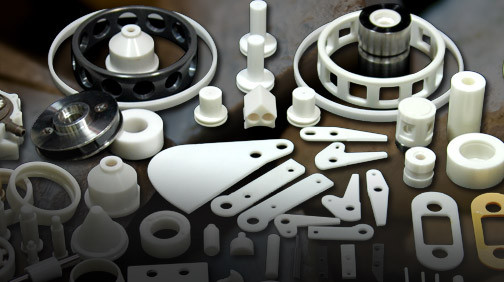
Ceramic is most commonly found in our homes and owned by both makers and consumers. The main contents of ceramics are clay and sand, and now it is made from advanced technology. Ceramic materials are now beginning to produce in the laboratory under the supervision of scientists. Nowadays, ceramics are not made from clay and sand only, different types of ingredients are used in the processing of ceramics, which creates a wide range of industrial products.
The ceramics that goes under the process of laboratories are known as industrial ceramics. The industrial ceramic has an increasing amount of thermal stability and corrosion resistance which are the two factors that make ceramic ideal for industrial ceramic products.
Alumina ceramic
Alumina is one of the advanced ceramic, which is composed of aluminum oxide. This ceramic can be formed through different manufacturing processes ranging from isotactic pressing to injection molding to extrusion. Finishing can be achieved from precision grinding and lapping, laser machining, and range of other means.
Steatite ceramic
Steatite ceramics are made from magnesium silicate and is a common material for insulators for electrical components. The properties of steatite include excellent dielectric strength, high mechanical strength, and low dissipation. Steatite’s amazing insulating properties are used in thermostats and different electrical household products.
Zirconia ceramic
Zirconia is made from zirconium oxide; this type of ceramic has unwavering strength and high corrosion resistance and abrasion. As it has a high tolerance to degradation, that is why zirconia is the preferable material in the manufacturing of grinding and bearings
Silicon carbide ceramic
The process of binding the silicon carbide grains is called sintering. This process creates a sturdy ceramic. Hardness is the reason it is used in high endurance applications such as car brakes, ceramic plates, car clutches, and bulletproof vests.
Comments
Post a Comment